
Transform your baking with freshly milled flour. Learn how freshly milled flour is better for your health and your taste buds.
I’ve been baking with sourdough for years and plan to continue for many more. For quite some time, I’ve wanted to take my baking to the next level and increase the nutritional benefits by using freshly milled flour. The only thing holding me back was the cost of a grain mill. I knew it would be an investment in my family’s future, but spending $400 on a kitchen item honestly hurt my heart a little.
After researching all the benefits of freshly milled flour, I realized I couldn’t put it off any longer. So I came up with a plan. I decided to sell items on Facebook Marketplace to earn the money for my much-coveted grain mill. I’m a frugal person, and I knew that if I could save for it outside of our regular family budget, I would feel much better about the purchase.
I always recommend looking for something secondhand before buying new. If you’d like tips on buying secondhand, check out my post Shopping Secondhand on Facebook Marketplace: A Simple Guide. I did try to find a grain mill secondhand, but I wasn’t successful in my area. After several months of saving — and with the help of a gift card from my husband — I was finally able to purchase my grain mill! I was so excited, and let me tell you, it does not disappoint. I decided on the Mockmill 200.
Types of Grain Mills
There are three main types of grain mills.
- Manual Hand Crank Mills – These are operated by hand — you physically turn a crank to grind the grain. They don’t require electricity, making them useful for small batches, off-grid living, or as a backup when power’s out.
- Electric Burr Mills – These use two abrasive surfaces (burrs) to crush the grain — one fixed, one rotating. Burr mills can be made with stone (natural or ceramic) or steel. They’re often adjustable, letting you choose from cracked grain → meal → fine flour.
- Electric “Impact” or Micronizing Mills – These mills don’t crush grain between burrs. Instead, they use high-speed metal blades or impellers that spin extremely fast to “shatter” grain kernels into flour.
Common Grain Mill Brands
The list below are the most common grain mill companies and the types of grain mills they sell.
NutriMill Classic Grain Mill — One of the most popular impact mills, ideal for quick, everyday flour milling at home.
WonderMill Electric Grain Mill — Another impact-style electric mill, known for speed and reliability for most grains.
Lehman’s Manual Power Grain Mill — A manual burr mill for small-batch milling without electricity — good for off-grid or backup use.
Mockmill 200 Stone Grain Mill — Premium stone-burr electric mill rated excellent for fine, nutrient-preserving flour.
Why did I choose the Mockmill 200?
I chose the Mockmill 200 for a variety of reasons. Although still expensive, it was more averagely priced compared to some other mills on the market. It is very quick and efficient when milling grain. I contemplated getting the Mockmill 100 but the 200 can mill grain twice as fast as the 100 and was only about $80 more expensive. And lastly I chose the Mockmill 200 because it is a burr mill and it preserves the nutrient of the grains as it is ground.
Different types of Grain
There are a variety of types of grains that can be used in your mill. A short list includes:
Hard red or hard white wheat – ideal for yeast breads
Soft wheat – good for pastries, pancakes, and cookies
Spelt – mild, nutty flavor; great for bread and baking
Einkorn – ancient grain with a rich flavor
Rye – used for rye breads and crackers
Oats (hulled/groats) – for oat flour
Corn (dent or flint) – for cornmeal and polenta
Rice (white or brown) – for rice flour
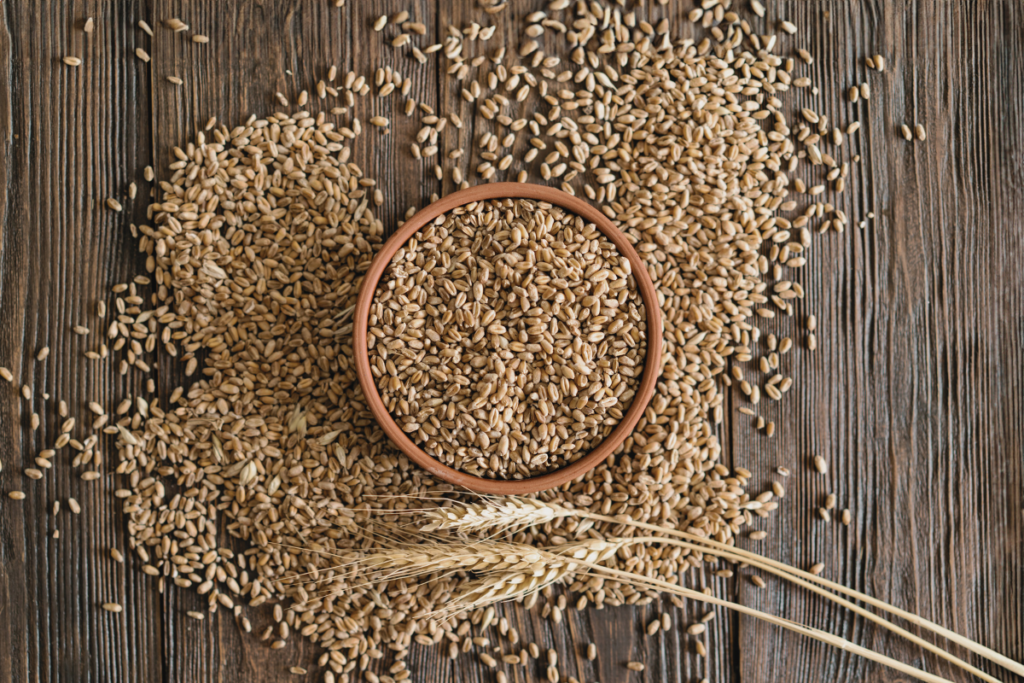
So far on my milling journey I have chosen to use only two different types of grains. I use hard white wheat as well as soft white wheat. I use hard when when making breads, bagels and other types of breads. When I’m making cookies, muffins or pastries I will use soft white wheat.
Where can I purchase my grains?
I purchase all of my wheat berries and the majority of my pantry staples from a food co-op company called Azure Standard. They allow you to buy in bulk at a cheaper price. Use my link and check them out today!
They also sell food safe containers and lids that are perfect for your wheat berries for long term storage.
What is the Conversion of All Purpose to Freshly Milled?
There is a slight learning curve when switching from all purpose to freshly milled flour but nothing that can’t easily be overcome with a little trial and error. My first loaf of bread may have come out a little dense but it was totally still edible. I am happy to report now that my bread is soft, airy and delicious.
When using hard wheat I have found that I can usually do a 1:1 conversion.
When using soft wheat I usually do 1 and 1/4 cup of freshly milled for every cup of all purpose.
What are the Benefits of Freshly Milled Flour?
Nutritional Benefits
Fresh milling preserves vitamins and minerals…there is a higher nutrient content overall. There is also more natural fiber and the healthy fats are preserved.
Baking & Cooking Benefits
When cooking with freshly milled flour there is better flavor and aroma. There is also improved dough performance. You can also control the texture of your grain by adjusting the setting on your mill.
Health & Digestibility
Some people find that when eating foods made from freshly milled flour they have an easier time digesting it even though it’s not gluten free. Freshly milled flour also leads to slower blood sugar spikes compared to refined flour.
Practical & Lifestyle Benefits
One of the most important benefits of freshly milled flour for me and my family is that there are no additives or preservatives. Also, there are a variety of different grains that can be milled such as wheat, spelt, einkorn, oats and more.
Use & Storage
When using freshly milled flour it is best to use it immediately or within 24-48 hours. It can be stored for a couple of days in an airtight container but freshly milled cannot be stored long term like processed flours. Because the whole grain is being milled over time the natural oils oxidize and can become rancid.
If you aren’t able to use your flour within the peak time frame it is best to freeze it. Freshly milled flour that is frozen can last up to six months. If used within 1-3 months the flour will still have the best flavor and nutritional profile.
How is Freshly Milled Flour Different than Store Bought?
Freshly milled flour and store-bought flour differ in nutrition, flavor, freshness, and baking behavior.
Freshly milled flour is made by grinding whole grains just before baking, so it keeps the bran and germ, which means it has more nutrients, natural oils, and fiber than most store-bought flour. Because it is so fresh, it has a richer, nuttier flavor and aroma, but it also has a much shorter shelf life and is best used right away or frozen. Freshly milled flour absorbs more liquid and often produces a heartier, denser texture unless recipes are adjusted. Store-bought flour, on the other hand, is milled long before sale, often refined and treated for consistency and long storage, which gives it a milder flavor, lighter texture, and more predictable baking results, but with fewer natural nutrients.
Next Steps…
If you have been on the fence as to whether you should purchase and mill and milling your own flour I hope this post has convinced you. Freshly milled flour can be purchased to bake with before investing in a mill at my store at Midland Mill & Pantry.
If you live in the Charlotte, NC area you can purchase freshly milled flour from me directly. I don’t currently ship but hope to in the future.
Comment below and let me know what you love most about freshly milled flour and share your favorite recipes!
Leave a Reply